
Soren's Chef Knife
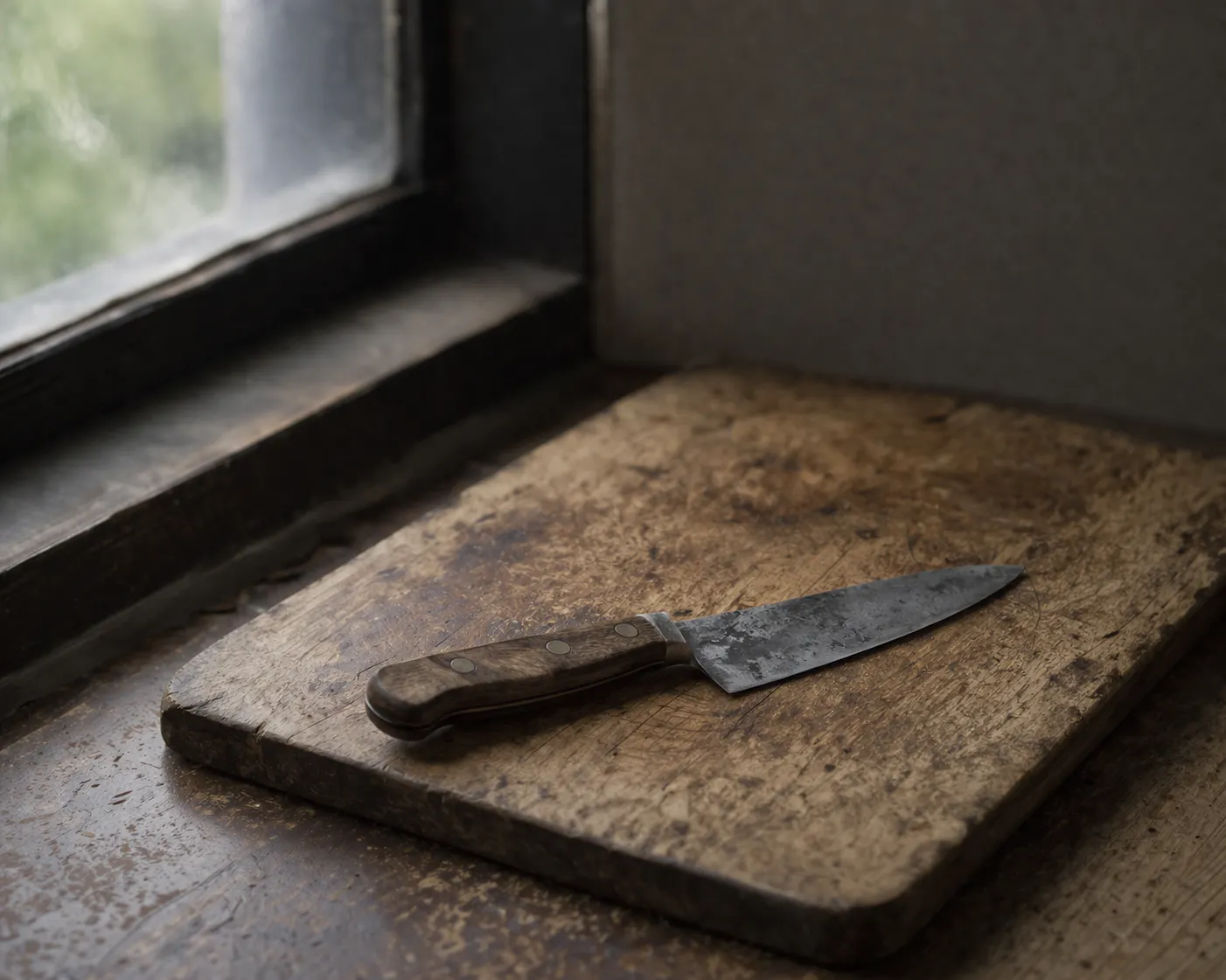
I bought it from a man at a street market who sharpened knives from a cart. It was not for sale. He sold it to me anyway.
The knife-sharpener at the Corvel Sunday market sets up at the far end of the square, away from the food stalls, which makes sense — the sound of a blade on a whetstone is not compatible with buying tomatoes. He had a small two-wheeled cart, a leather apron, and three knives of his own lined up on a cloth beside him.
I had brought two of our kitchen knives to be sharpened. He worked on them without comment, which is the mark of a professional — a bad sharpener will explain what he's doing; a good one just does it.
When he handed them back I noticed the third knife on the cloth — heavier than the others, clearly old, the handle a dark wood worn smooth with decades of use. I asked about it.
He said it wasn't for sale.
We talked for a while — about the knife, about where it had come from, about how long he had been sharpening. He had inherited the cart and the trade from his father, and the knife had come with both. He used it at home, he said. He hadn't brought it to sell.
Then he looked at it for a moment, looked at me, and named a price.
I paid it. He wrapped it in the cloth it had been resting on and handed it over without ceremony, the way people hand over things they've decided to part with before they can change their minds.
Mara, who had been at the food stalls, came back to find me holding a cloth-wrapped knife and looking, apparently, like I needed to explain myself.
I have had it for three years now. It holds an edge better than anything else in the kitchen and has a weight and balance so specific that every other knife feels slightly wrong after using it. Mara uses it too — she denies having a preference, but I notice which one she reaches for.
I had it sharpened last spring by a woman at the Halvern market who looked at it carefully before she started and said — not unkindly — that someone had taken very good care of this.
I said it wasn't originally mine.
She said that was usually the way with the good ones.